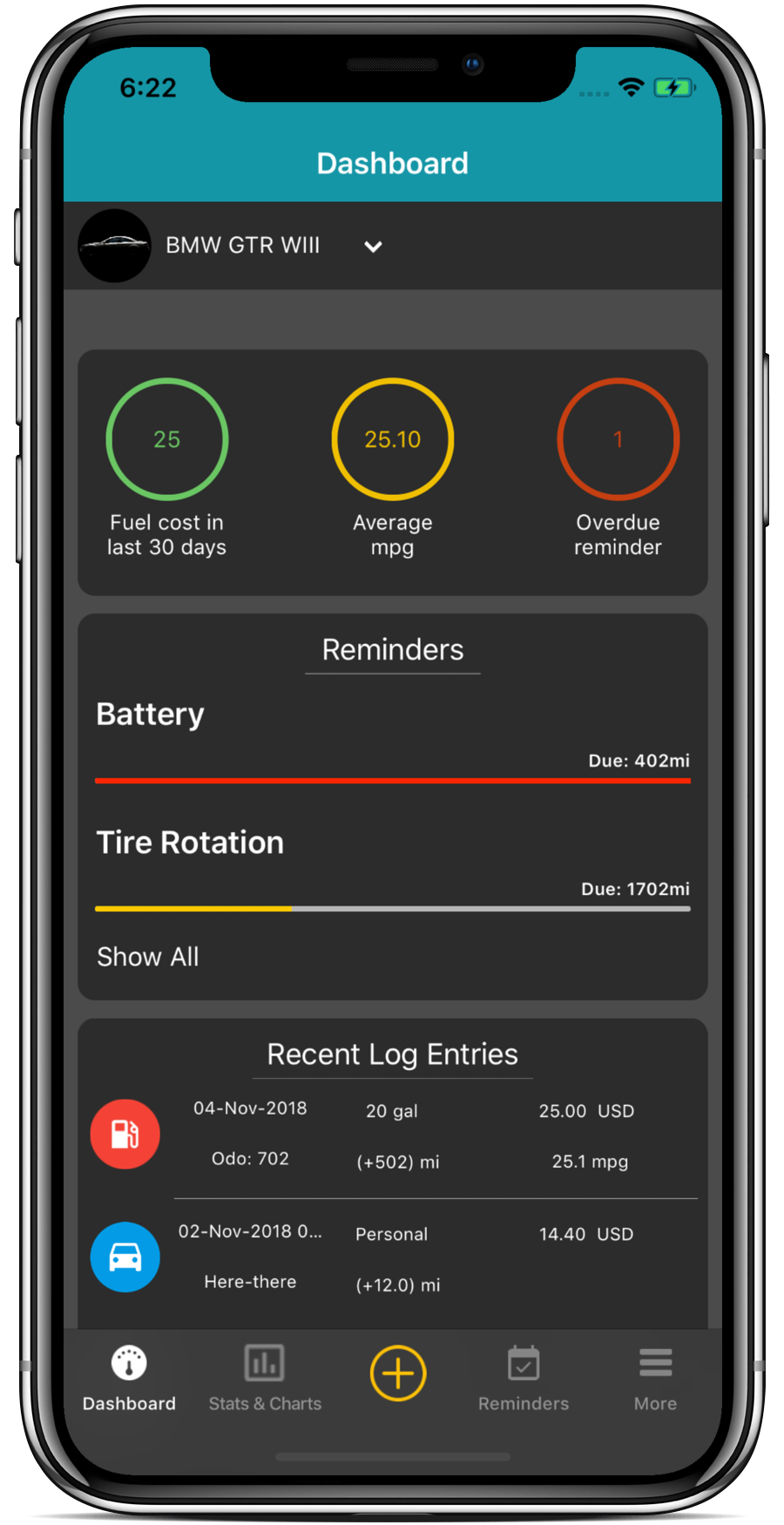
Record fill-ups for all your cars and monitor your car’s efficiency.
Need to track business mileage? Just start auto trip and we will track all your trips in the background whenever you are on the move.
Don’t lose sight of your maintenance and services. Log your services and we will remind you when its due.
Know your vehicle's running costs and plan for your expenses.
Sign into the cloud and get easy access to all your data from anywhere and any device.
Run your reports or schedule them weekly or monthly to know more about your fill-ups , mileage and expenses.
If you’ve seen this output, you already know the sinking feeling. It means your attack has failed. Your carefully curated wordlist— probable.txt or a variant thereof—did not contain the one string of characters needed to unlock the hash. But what does "exclusive" mean in this context? Why did a list called "probable" miss the mark? And, most importantly, how do you move forward?
In the high-stakes world of cybersecurity, password cracking often feels like a battle of attrition. You have a hash, a target, and a tool like John the Ripper or Hashcat humming away. But then, after hours of processing, you encounter a cryptic, frustrating message: "wordlistprobabletxt did not contain password exclusive" . wordlistprobabletxt did not contain password exclusive
The next time you see that message, don't despair. Parse it, pivot, and prove that "exclusive" is just another challenge waiting to be solved. Keywords integrated: wordlistprobabletxt did not contain password exclusive, password cracking, John the Ripper, Hashcat, exclusive password, wordlist failure, hybrid attack, rule-based attack. If you’ve seen this output, you already know
john --wordlist=probable.txt hash.txt Output: wordlistprobabletxt did not contain password exclusive But what does "exclusive" mean in this context
: hashcat -a 0 -r best64.rule hash.txt probable.txt
| Tool | Typical Output When Wordlist Fails | Interpretation | | :--- | :--- | :--- | | | No password hashes left to crack (see FAQ) or Did not find any password in wordlist | All hashes remain uncracked after wordlist run. | | Hashcat | Session.......: hashcat Status........: Exhausted | All candidates from the wordlist were tried; zero matches. | | Hydra (for SSH/RDP) | [STATUS] attack finished for xxx (waiting for childs) with zero valid entries | Wordlist did not contain any correct passwords. |
Remember: an exclusive password only means it hasn’t appeared in a major breach yet . It does not mean it is safe. With hybrid attacks, custom rules, mask attacks, and thoughtful reconnaissance, even the most exclusive password can be reduced to a pattern—and cracked.

If you’ve seen this output, you already know the sinking feeling. It means your attack has failed. Your carefully curated wordlist— probable.txt or a variant thereof—did not contain the one string of characters needed to unlock the hash. But what does "exclusive" mean in this context? Why did a list called "probable" miss the mark? And, most importantly, how do you move forward?
In the high-stakes world of cybersecurity, password cracking often feels like a battle of attrition. You have a hash, a target, and a tool like John the Ripper or Hashcat humming away. But then, after hours of processing, you encounter a cryptic, frustrating message: "wordlistprobabletxt did not contain password exclusive" .
The next time you see that message, don't despair. Parse it, pivot, and prove that "exclusive" is just another challenge waiting to be solved. Keywords integrated: wordlistprobabletxt did not contain password exclusive, password cracking, John the Ripper, Hashcat, exclusive password, wordlist failure, hybrid attack, rule-based attack.
john --wordlist=probable.txt hash.txt Output: wordlistprobabletxt did not contain password exclusive
: hashcat -a 0 -r best64.rule hash.txt probable.txt
| Tool | Typical Output When Wordlist Fails | Interpretation | | :--- | :--- | :--- | | | No password hashes left to crack (see FAQ) or Did not find any password in wordlist | All hashes remain uncracked after wordlist run. | | Hashcat | Session.......: hashcat Status........: Exhausted | All candidates from the wordlist were tried; zero matches. | | Hydra (for SSH/RDP) | [STATUS] attack finished for xxx (waiting for childs) with zero valid entries | Wordlist did not contain any correct passwords. |
Remember: an exclusive password only means it hasn’t appeared in a major breach yet . It does not mean it is safe. With hybrid attacks, custom rules, mask attacks, and thoughtful reconnaissance, even the most exclusive password can be reduced to a pattern—and cracked.

Simply Fleet is a simple and affordable software to help you track, monitor and analyse your fleet’s operations.