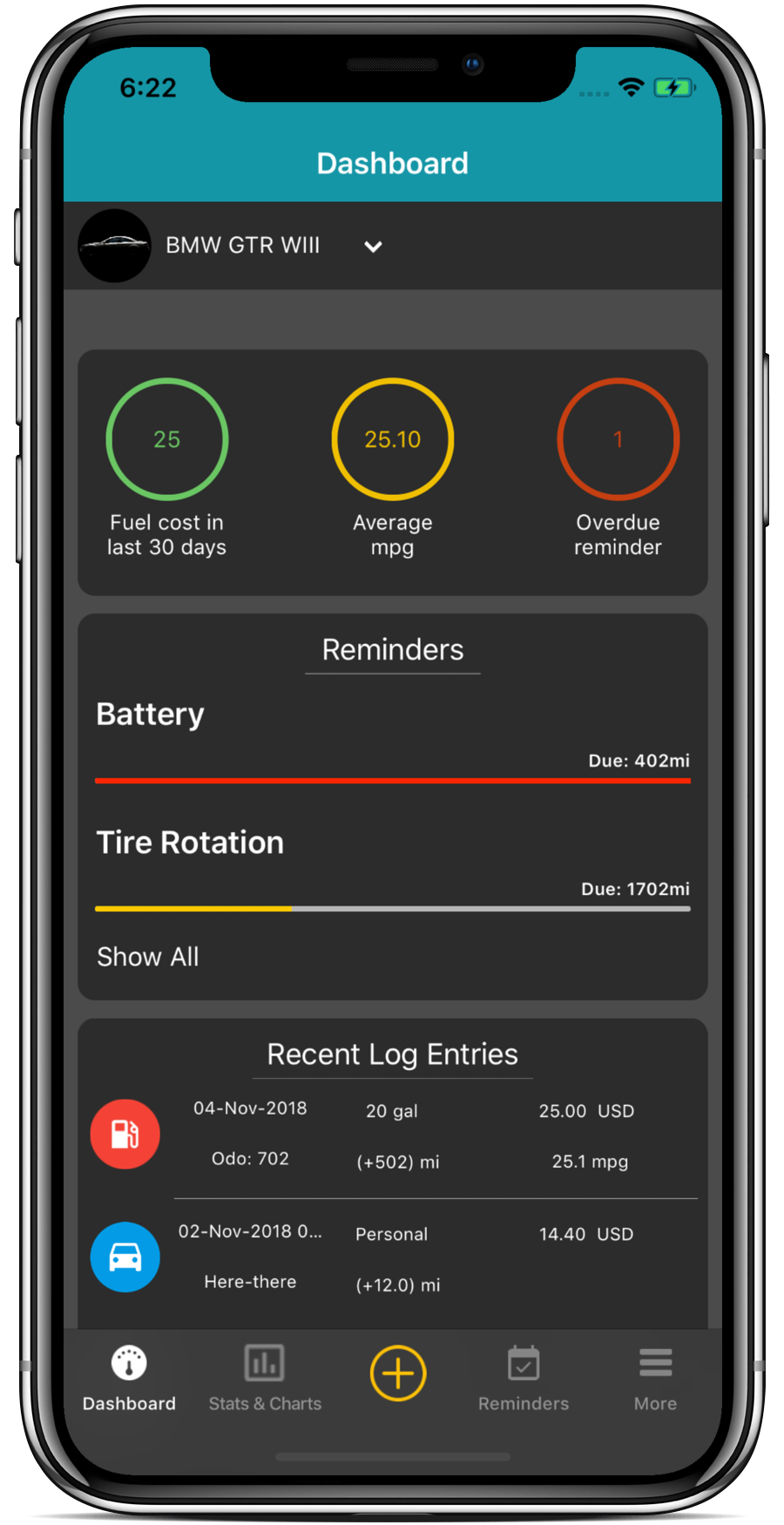
Record fill-ups for all your cars and monitor your car’s efficiency.
Need to track business mileage? Just start auto trip and we will track all your trips in the background whenever you are on the move. Decrypt Zte Config.bin
Don’t lose sight of your maintenance and services. Log your services and we will remind you when its due. binwalk decrypted
Know your vehicle's running costs and plan for your expenses. You need to
Sign into the cloud and get easy access to all your data from anywhere and any device.
Run your reports or schedule them weekly or monthly to know more about your fill-ups , mileage and expenses.
binwalk decrypted.bin If it detects gzip compressed data , extract it manually.
But what happens when you lose the admin password? What if you need to migrate settings to a new device, or a security researcher needs to audit for vulnerabilities? You need to .
Introduction: The Fortress of ZTE Configuration For network administrators, cybersecurity researchers, and advanced home users, the humble router is both a gateway and a vault. Within its flash memory lies the key to the entire network: administrator passwords, PPPoE credentials, Wi-Fi PSKs, and often custom firewall rules. ZTE, a major global telecommunications equipment manufacturer, protects these secrets by storing them in an encrypted file typically named config.bin . When users back up their router settings, they are handed this binary blob—a seemingly unintelligible wall of data.
Because XOR is symmetric, applying the same key to the ciphertext returns the plaintext. This “encryption” is trivial to break. Generation 2: The AES Era (2015–Present) Modern ZTE routers (especially those with Linux-based firmware 3.0+) use AES-256-CBC . The key is derived using PBKDF2 (Password-Based Key Derivation Function 2) with a known static salt and a variable secret—often the router’s unique serial number or MAC address.
# After AES decrypt, you might have a raw data stream dd if=decrypted_output.bin of=uncompressed.gz bs=1 skip=2 # skip header gunzip uncompressed.gz cat uncompressed Alternatively, use binwalk to analyze the decrypted blob:
00 01 02 03 04 05 06 07 08 09 0A 0B 0C 0D 0E 0F

binwalk decrypted.bin If it detects gzip compressed data , extract it manually.
But what happens when you lose the admin password? What if you need to migrate settings to a new device, or a security researcher needs to audit for vulnerabilities? You need to .
Introduction: The Fortress of ZTE Configuration For network administrators, cybersecurity researchers, and advanced home users, the humble router is both a gateway and a vault. Within its flash memory lies the key to the entire network: administrator passwords, PPPoE credentials, Wi-Fi PSKs, and often custom firewall rules. ZTE, a major global telecommunications equipment manufacturer, protects these secrets by storing them in an encrypted file typically named config.bin . When users back up their router settings, they are handed this binary blob—a seemingly unintelligible wall of data.
Because XOR is symmetric, applying the same key to the ciphertext returns the plaintext. This “encryption” is trivial to break. Generation 2: The AES Era (2015–Present) Modern ZTE routers (especially those with Linux-based firmware 3.0+) use AES-256-CBC . The key is derived using PBKDF2 (Password-Based Key Derivation Function 2) with a known static salt and a variable secret—often the router’s unique serial number or MAC address.
# After AES decrypt, you might have a raw data stream dd if=decrypted_output.bin of=uncompressed.gz bs=1 skip=2 # skip header gunzip uncompressed.gz cat uncompressed Alternatively, use binwalk to analyze the decrypted blob:
00 01 02 03 04 05 06 07 08 09 0A 0B 0C 0D 0E 0F

Simply Fleet is a simple and affordable software to help you track, monitor and analyse your fleet’s operations.